WATER RETENTION POLYMER FOR LAWNS
Use Less Water and Keep Your Lawn Greener
Water Retention Polymers
Imagine if every drop of water you put on your lawn lasted longer. With Rain Maker, it can!
Rain Maker is a professional soil treatment that helps your lawn retain moisture longer and reduce watering needs. The treatment contains super-absorbent polymers that can hold up to 400 times their weight in water, storing moisture in the soil and releasing it back to the roots as the soil dries.
How Rain Maker Works
Rain Maker uses specialized water-absorbing polymers that act like tiny reservoirs in the soil.
When You Water Your Lawn:
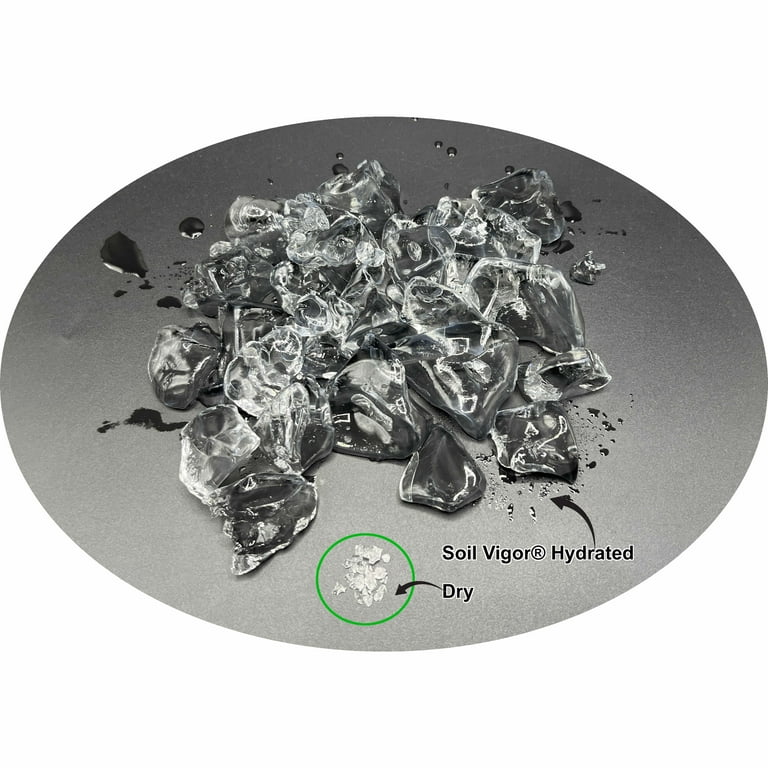
1 – The polymers absorb water and expand into a jelly bean sized gel blob.
2 – The stored moisture stays in the soil longer.
3 – As the soil dries, the water is slowly released back to the grass roots.
This process helps maintain consistent soil moisture, improving overall turf health and reducing water waste.
Non-Toxic
Rain Maker uses potassium-based polymers similar to the absorbent material used in products like baby diapers.
These Polymers:
• are considered non-toxic
• contain approximately 16% potassium
• are designed specifically for turf applications
After application, the small granules work their way into the soil within 1–2 weeks, where they remain active in the top 8–12 inches of soil for approximately 1–2 years.
For best results, we recommend one application per year.
Aids in Recovery From Drought Stress
Additionally, Rain Maker helps prevent and aids in recovery from lawn fungus invasions, including issues such as localized dry spots, Ascochyta leaf blight, and dollar spot fungus.
Rain Maker
Lawn Watering Guidelines
Water Fewer Days with Rain Maker
- Rain Maker helps maximize watering efficiency by extending the time between schedule increases, delaying the need to move from watering one day per week to two days per week, and beyond.
- Later in the season, it also allows watering to be reduced sooner, helping you transition from three days per week back to two, and then to one day per week earlier than usual.
- In cooler years, a lawn treated with the Super Seeder machine may require only two days of watering per week for the entire season.
Note: The schedule below is provided as an example and may vary depending on the temperatures and precipitation for each individual year.
Month
of the Year
January – March
April
May
June
July
August
September
October
November – December
Lawn Watering
without
Rain Maker
Water is Off
(1x Per Week)
(Middle of April – Late May)
2 Days Per Week
(Late May – Early June)
3 Days Per Week
(Mid June- Late August)
2 Days Per Week
(Late August – Late September)
1 Day Per Week
(Late September – Sprinkler Blowout)
Water is Off
Lawn Watering
with
Rain Maker
Water is Off
(1x Per Week)
(Middle of April – Early June)
2 Days Per Week
(Early June – Late June)
3 Days Per Week
(Late June – Middle August)
2 Days Per Week
(Mid August – Mid September)
1 Day Per Week
(Mid September – Sprinkler Blowout)
Water is Off
Lawn Watering
with Rain Maker +
Super Seeder
Water is Off
(1 Day Per Week)
(Middle of April – Mid June)
2 Days Per Week
(Mid June – Early July)
3 Days Per Week
(Early July – Early August)
2 Days Per Week
(Early August – Early September)
1 Day Per Week
(Early September – Sprinkler Blowout)
Water is Off
Water Retention Polymers for Lawns
Measure Your Sprinkler System's Water Output
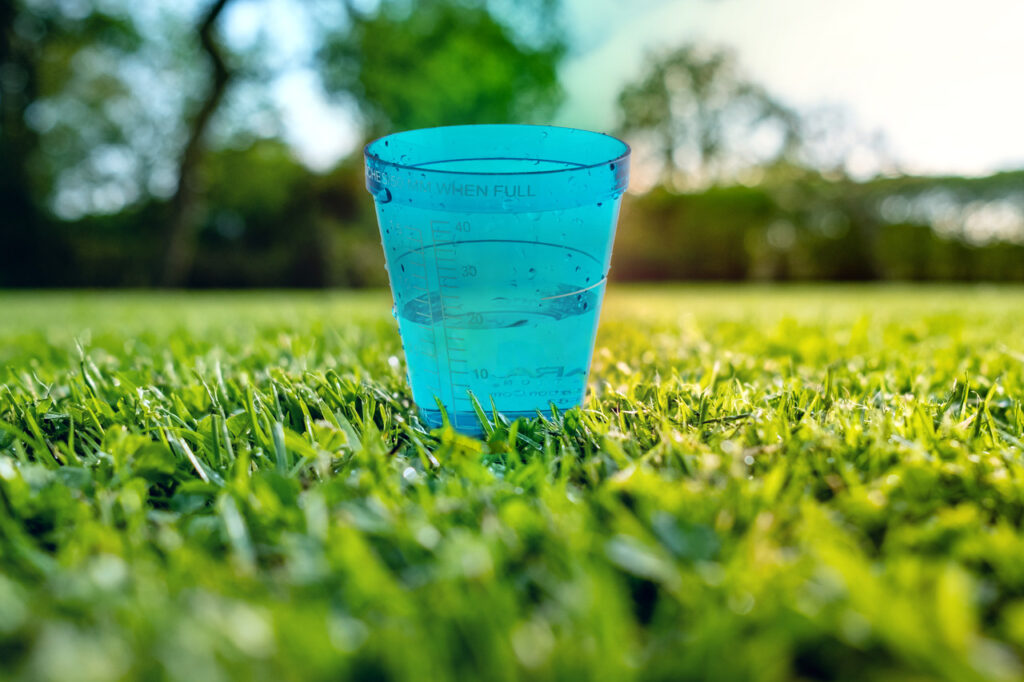
Use a Rain Gauge
To find out how much water your sprinkler system applies, place a rain gauge or a flat-bottomed container (such as a Tupperware dish) on your lawn. Run your sprinklers as usual for about 30 minutes, then measure the depth of water in the container.
If the container collects ½ inch of water in 30 minutes, follow this watering schedule:
Early Spring & Late Fall: Water once per week to reach about 1/2 inch of water total per week.
- Spring & Fall: Water twice per week to reach about 1 inch of water total per week.
Summer: Water three times per week to reach about 1.5 inches of water total per week.
This simple test helps ensure your lawn receives the right amount of water without over-watering.
Rain Gauge
When Can Rain Maker Be Applied to a Lawn?
Ideal Time to Have Rain Maker Applied:
After an aeration has been performed, typically in the spring.
Application Season for Rain Maker:
Any time of year, but typically before September. We usually apply an application of Rain Maker after a core aeration.
Schedule an Application of Rain Maker
Organo-Lawn is your local professional lawn care expert and can set up a conditioning program for your lawn. Call today to talk to one of our professional lawn care technicians.
(303) 499-2000 Boulder or (970) 225-9425 Fort Collins
Water Retention Polymer for Lawns FAQs
Is Rain Maker Safe for My Pets?
According to the Department of Agriculture, we cannot legally claim that any lawn care product is safe. In fact, the Department of Agriculture states that even water is not considered safe. Rain Maker, on the other hand, is regarded as non-toxic. It is made from the same material used in baby diapers for water absorption and is also utilized in water filtration systems to remove pollutants from drinking water.
How to Reduce Lawn Watering in a Colorado Lawn?
Most homeowners tend to overwater their lawns, especially during the spring and fall. The ideal moisture level in the soil is composed of 25% water, 25% air, and 50% soil. To encourage deep root growth, the 1-2-3-2-1 lawn watering technique is highly effective. Grass with deep roots becomes more resistant to drought.
If the lawn is mowed to a height of 3 inches or taller, is being watered according to the 1-2-3-2-1 technique, and has grass roots that reach at least 8 inches deep, then a lawn that has received an application of Rain Maker may not need to be watered three times per week during the hot summer months. Consequently, the lawn watering schedule might resemble the 1-2-1 technique.
Pet Friendly
Additional FAQs for Rain Maker Water Retention Polymers
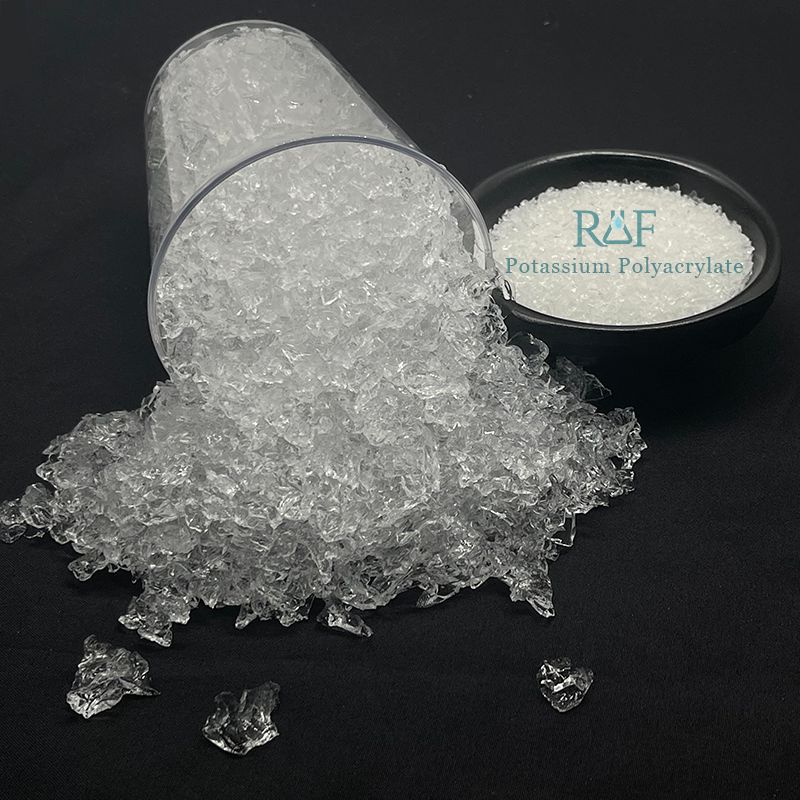
Rain Maker is a clear or white polymer that resembles sea salt. When it gets wet, it transforms into a gel that looks like broken glass or jelly. After application, it seeps into the soil within one to two weeks.
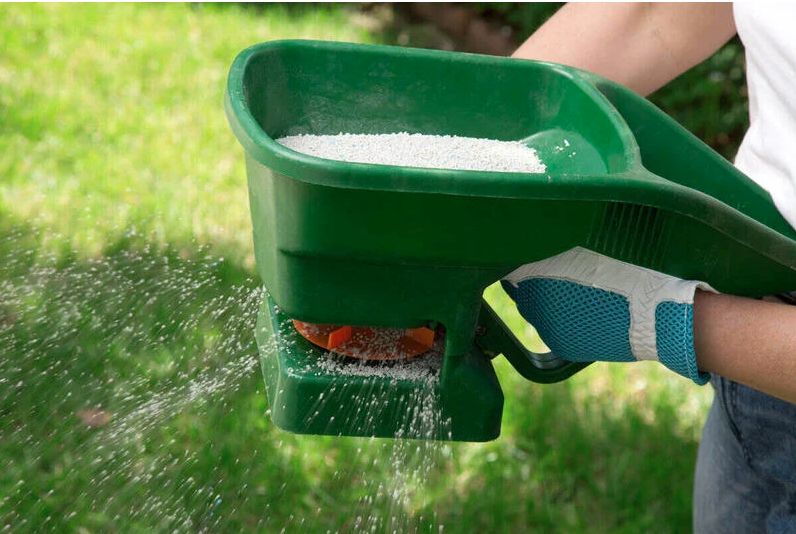
Rain Maker is applied as a granular with a hand spreader.
No, Rain Maker is not considered organic. It is a synthetic polymer made through a chemical process, designed to absorb and retain water. While it is biodegradable and non-toxic in its intended applications, it does not meet the criteria for “organic” under agricultural or gardening standards that focus on naturally derived materials.
Why It’s Not Organic:
- Synthetic Composition: Rain Maker is chemically manufactured and not derived from natural sources like plants, animals, or minerals.
- Regulatory Standards: Organic gardening typically excludes synthetic polymers, focusing on materials that decompose naturally without human processing.
Its Role in Gardening:
Although not organic, potassium polyacrylate is often used in sustainable gardening practices because:
- It reduces water consumption by storing water in the soil for plant roots.
- It minimizes water runoff and drought stress.
For organic alternatives, materials like compost, mulch, and natural hydrogels may be considered. Let me know if you’d like suggestions for organic soil amendments!
Rain Maker is considered non-toxic and is made from the same material used in baby diapers for water absorption, as well as in water filtration systems to filter pollutants from drinking water.
If a dog eats Rain Maker (potassium polyacrylate), the situation typically depends on the amount ingested. Potassium polyacrylate is considered non-toxic, but it can still pose potential risks, especially if consumed in large quantities. Here’s what you should know:
- Potential Risks
- Swelling in the Stomach: Potassium polyacrylate is a superabsorbent polymer. It swells significantly when exposed to moisture, which could lead to gastrointestinal discomfort or blockages in severe cases.
- Mild Irritation: Some dogs may experience minor stomach upset, such as vomiting or diarrhea.
- Choking Hazard: If consumed in a granular form, it might pose a choking risk, especially for small dogs.
- Symptoms to Watch For
- Vomiting or retching.
- Diarrhea or constipation.
- Swollen or distended abdomen.
- Signs of pain or discomfort (e.g., whimpering, restlessness).
- Difficulty eating or drinking.
- What to Do if Your Dog Eats Potassium Polyacrylate
- Assess the Amount: Determine how much your dog ingested. Small amounts may pass without issue, but large amounts could require medical attention.
- Contact a Veterinarian: Call your vet or an animal poison control hotline for advice, especially if your dog shows any symptoms.
- ASPCA Animal Poison Control: (888) 426-4435.
- Do Not Induce Vomiting: Unless specifically directed by a veterinarian, inducing vomiting can make the situation worse.
- Provide Water: Offering small amounts of water can help the material pass through the digestive system, but avoid excessive amounts to prevent further swelling in the stomach.
While potassium polyacrylate is generally non-toxic, excessive ingestion could lead to complications depending on the circumstances. Always err on the side of caution and consult a veterinarian if you’re unsure.
Rain Maker remains effective in the soil for 1 to 2 years. During this period, it breaks down due to microbial activity or may move down to lower soil levels, becoming less effective. The polymers in Rain Maker have a “memory,” which indicates the number of times they can absorb and release water before losing their effectiveness. This memory generally lasts for 1 to 2 years. For optimal effectiveness, we recommend applying Rain Maker annually.
Rain Maker can reduce your watering needs by 25% to 40%, depending on air temperature and soil consistency, but every lawn is different so it is difficult to predict.
Rain Maker decreases your watering needs by 25% to 40%, depending on air temperatures and soil conditions. In addition to saving water, Rain Maker reduces stress on the lawn, minimizes the movement of herbicides through the soil to water sources, and limits the leaching of fertilizers from the soil.
There are no legal requirements regarding staying off the lawn after application; however, if you want to be extra cautious, we recommend avoiding the lawn until the product has been thoroughly watered into the soil. It is non-toxic to the skin, but it can be slippery when wet before it has had enough time to absorb into the soil.
Rain Maker does not create water—it simply helps the water that is applied to a lawn stay in the soil longer and work more effectively.
Please note that Rain Maker works best when a lawn is watered deeply. Therefore, it is better to give the lawn 1 deep watering per week vs 3 shallow waterings.
Rain Maker cannot guarantee protection from drought conditions, but it can help make every drop of water a lawn received work better.